
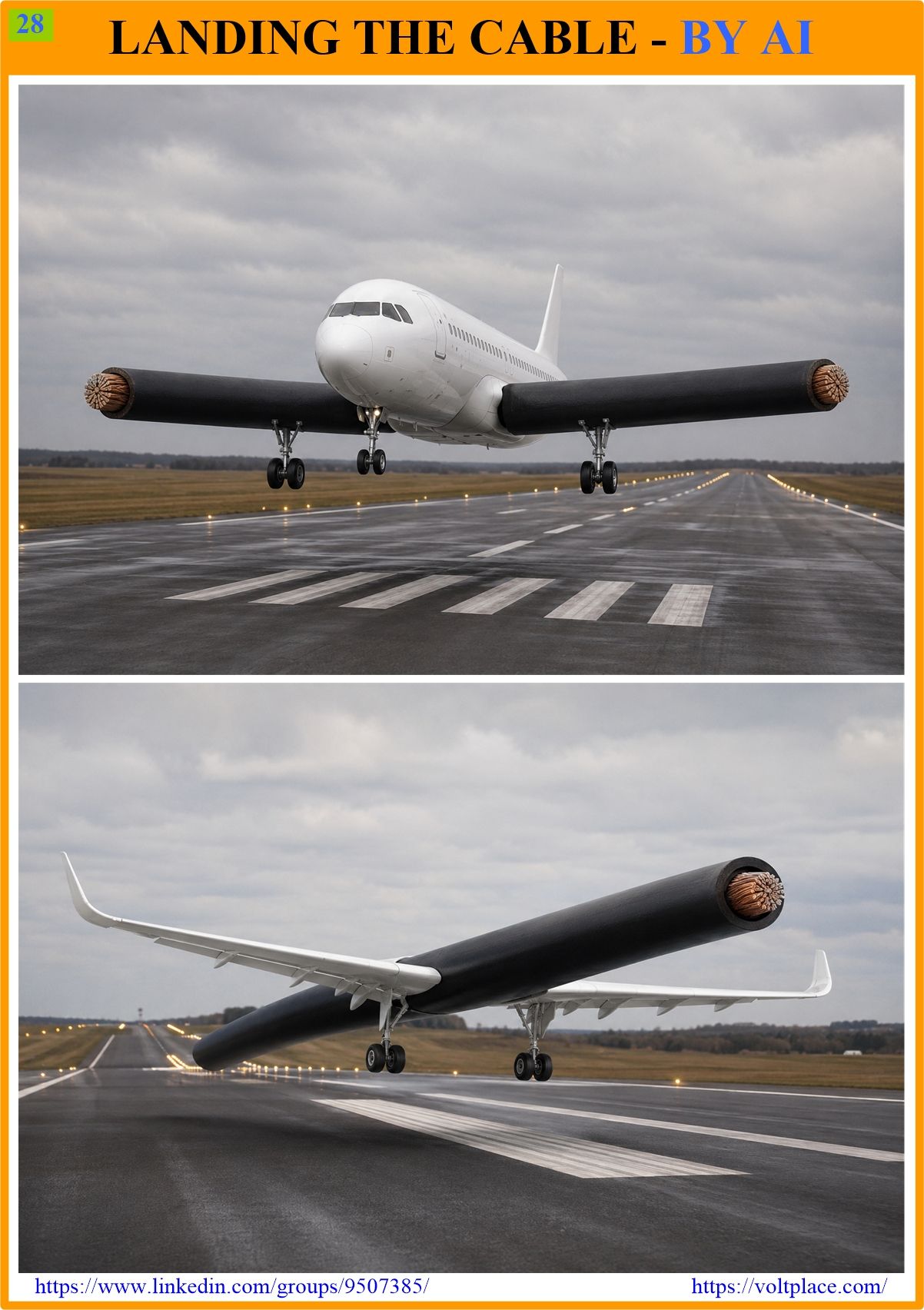
Landing the cable by AI
In aviation, there are two main ways to land an airplane on the ground: manually by pilots or using autopilot. When the plane lands safely, passengers often start clapping, thanking the pilot. Would they clap if they knew that they were landed not by a live pilot, but by an autopilot? So, today there is a short post about AI (Artificial Intelligence) and how to respond to its expansion on LinkedIn – put “likes” or send to spam.
The BAD thing is that, over the past 3-4 years, so much content has been generated using AI that it creates problems for us, ordinary LinkedIn users, who have to sort through this junk, which seems to look beautiful and even professional, but when we start reading…..
The NICE thing is that not only we have problems with this stuff, but also the AI itself. The fact is that AI is constantly training, and it has started consuming its own junk. As a result, the developers of AI are looking for an opportunity to ensure that AI does not learn from the entire array of open data, but only from the one that existed before the advent of AI, that is, say, before 2022.
Anyone can ask ChatGPT (or other models) to generate a LinkedIn post on a given topic, and AI will do it in 1 minute. Such posts usually have a large number of small beautiful images, a lot of small icons with short text under them, evenly positioned on the screen. It all looks attractive, and people give likes (without checking). If people had checked it, they would have realized that they shouldn’t have liked it, but complained about spam (there is such an option on LinkedIn – press on 3 dots from the right side of the header of the post, select “Report post”, select the reason as “Spam”).
OK, it’s clear about robots from AI. But how are real posts created that are made by real people?
Many posts on LinkedIn consist of 1-2 photos and 1-2 paragraphs of text. It doesn’t take much time to create such posts (say, just 10 min), but such posts make sense because we see real photos from real facilities, and we can learn there a lot.
As for the posts in the “High Voltage Cable Line” group, they are definitely created by a slow “turtle”. That is, from the moment the idea appears until the completion, at least 8-10 hours of work pass. This includes:
1️⃣ Study of literature.
2️⃣ Performing calculations in MATHCAD, ATP/EMTP, Cableizer, ELEK, etc.
3️⃣ Plotting graphs in MS EXCEL.
4️⃣ Grouping of the material in MS VISIO (placing titles, formulas, photos, graphs on the sheet) and exporting to JPG format.
5️⃣ Writing a text of the post in MS WORD.
There were posts in our group that took up to 3 days to prepare. Fortunately, some of the posts brought new ideas to the industry and were reported to CIGRE (see you in Paris 2026). As for AI’s posts, there’s nothing new in them, and they are like old chewing gum. But, somehow, AI posts all looked great – similar to the photo of the “Cable landing” process.
You can discuss this post on LinkedIn, in the “High Voltage Cable Lines” group, by following the link to the post.