2026 - Cable lines / 28.07.2026

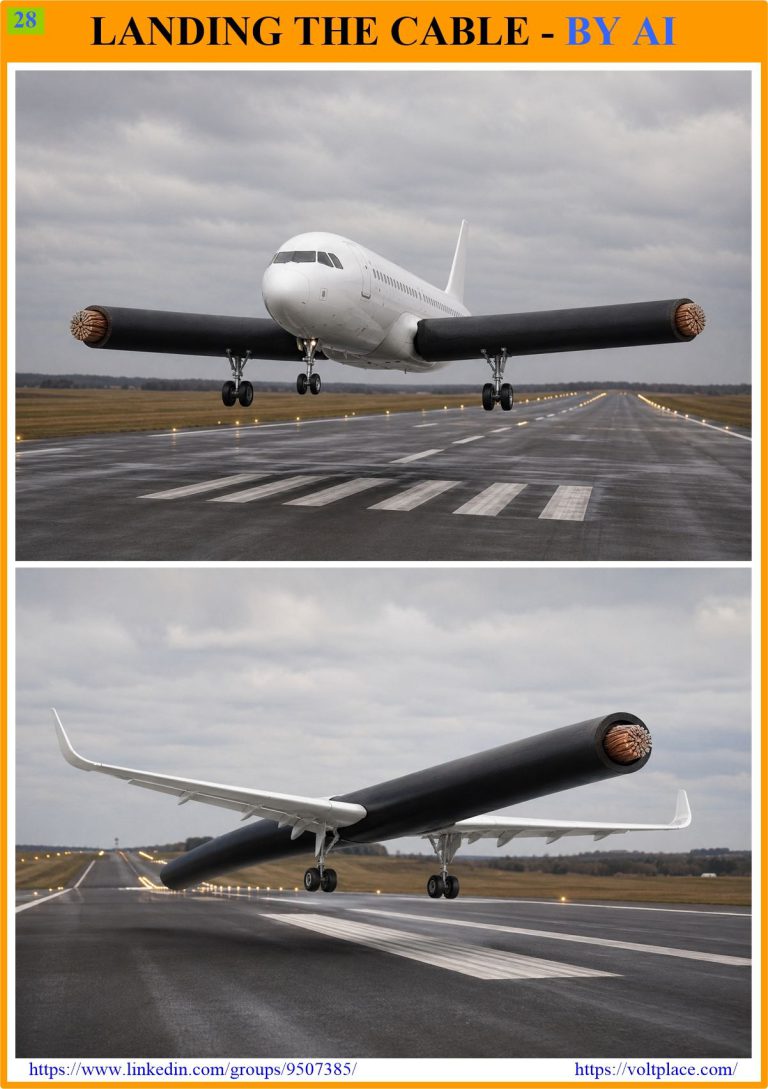
Landing the cable by AI

In aviation, there are two main ways to land an airplane on the ground: manually by pilots or using autopilot. When the plane lands safely, passengers often start clapping, thanking the pilot. Would they clap if they knew that they were landed not by a live pilot, but by an autopilot? So, today there is
Read More
2026 - Cable lines / 23.07.2026

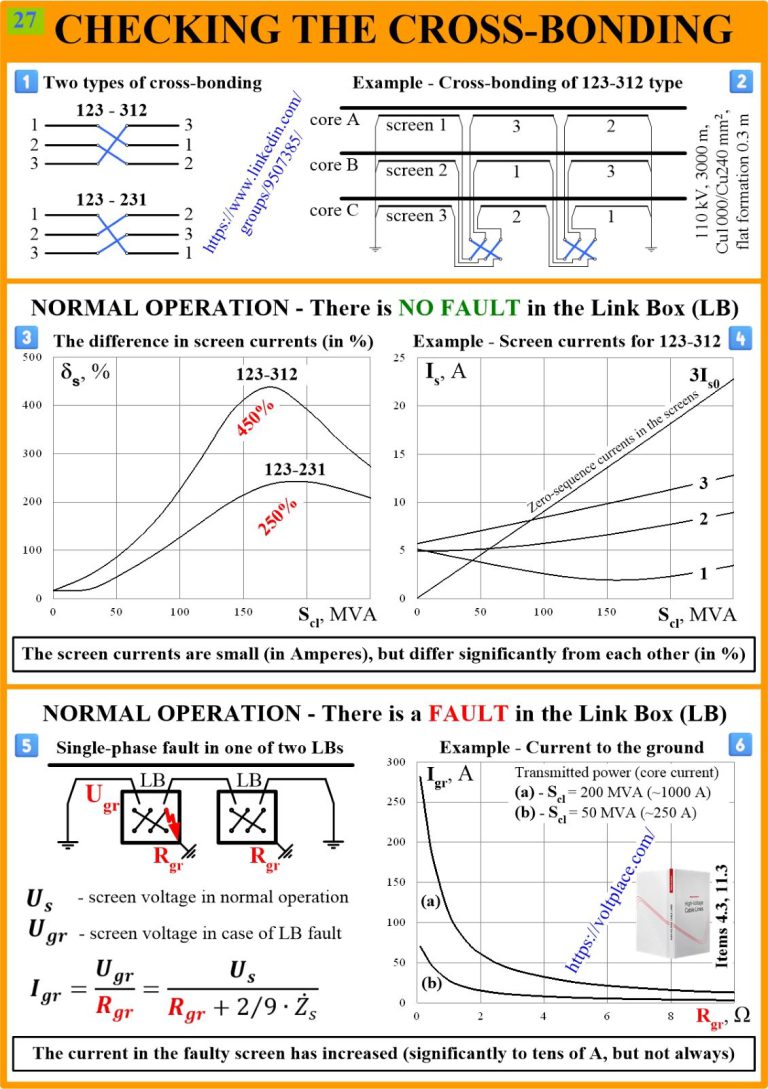
Checking the cross-bonding of cable screens

If the HVAC cable has a fault of its “core insulation”, then there is a current which is significantly higher than in normal operation. Therefore, the protection sees such damage well, and the line can be quickly disconnected. But what happens if we have a damage to the “screen insulation” (outer sheath or link box)?

Read More
2026 - Cable lines / 08.07.2026

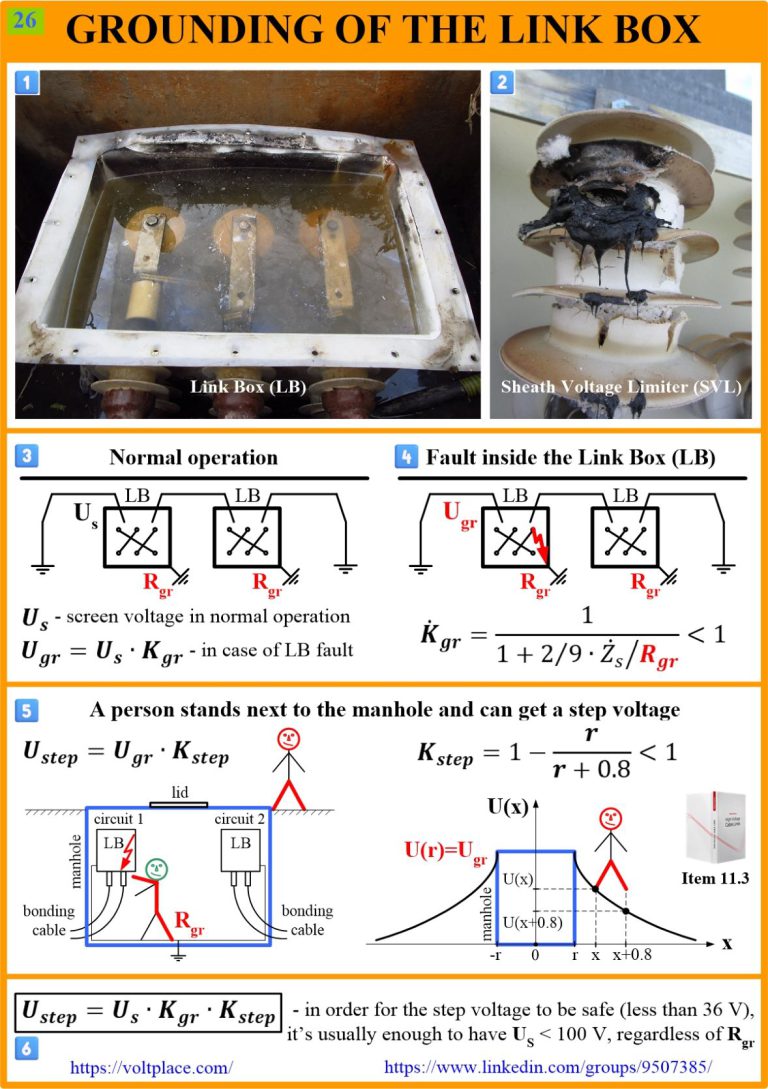
Safety in cross-bonding nodes

Cross-bonding of screens is common for HVAC lines. It is performed using link boxes placed along the line and which have jumpers inside for connecting screens’ sections and sheath voltage limiters (SVL). It is necessary to make a grounding of the boxes, and this is a definite problem due to the fact that there is

Read More
2026 - Cable lines / 23.06.2026

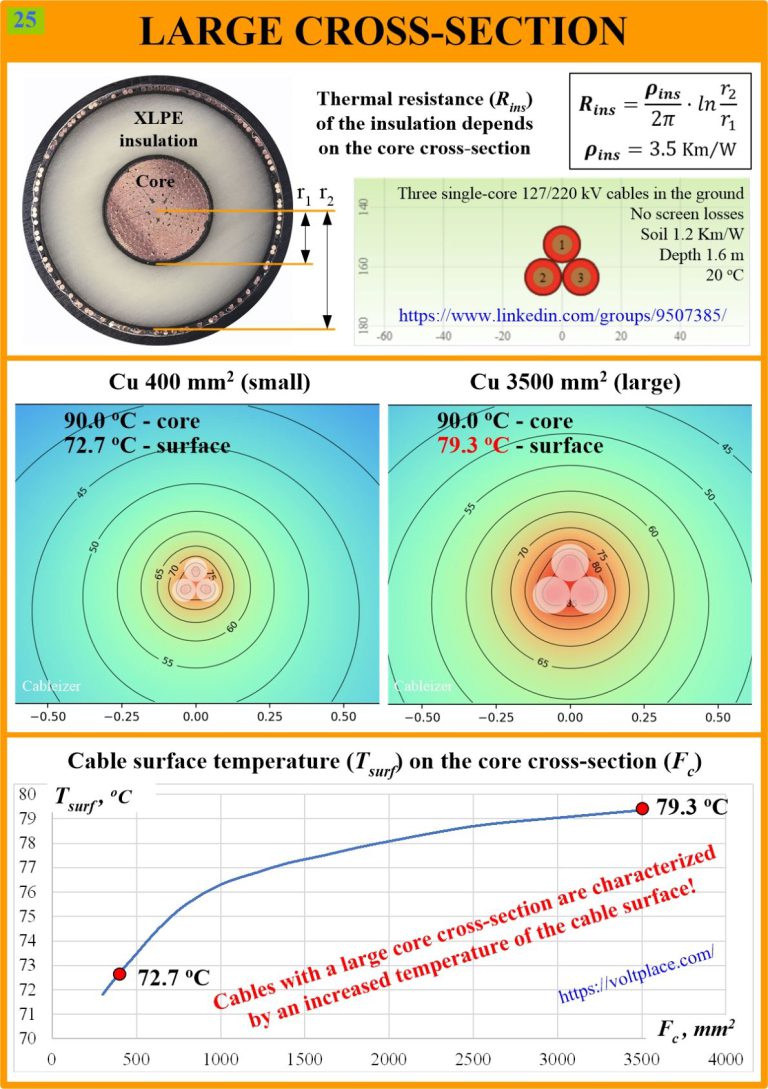
Large cross-section of the conductor

Throughout the history of power cable lines, the maximum conductor (core) cross-section was constantly increasing. Once upon a time, a cross section of 1000 mm2 was considered a large. However, at present, the 2500 mm2 is no surprise to anyone, and there are already projects where the cross-section reaches 3200-3500 mm2 and even 4000 mm2

Read More
2026 - Cable lines / 20.06.2026

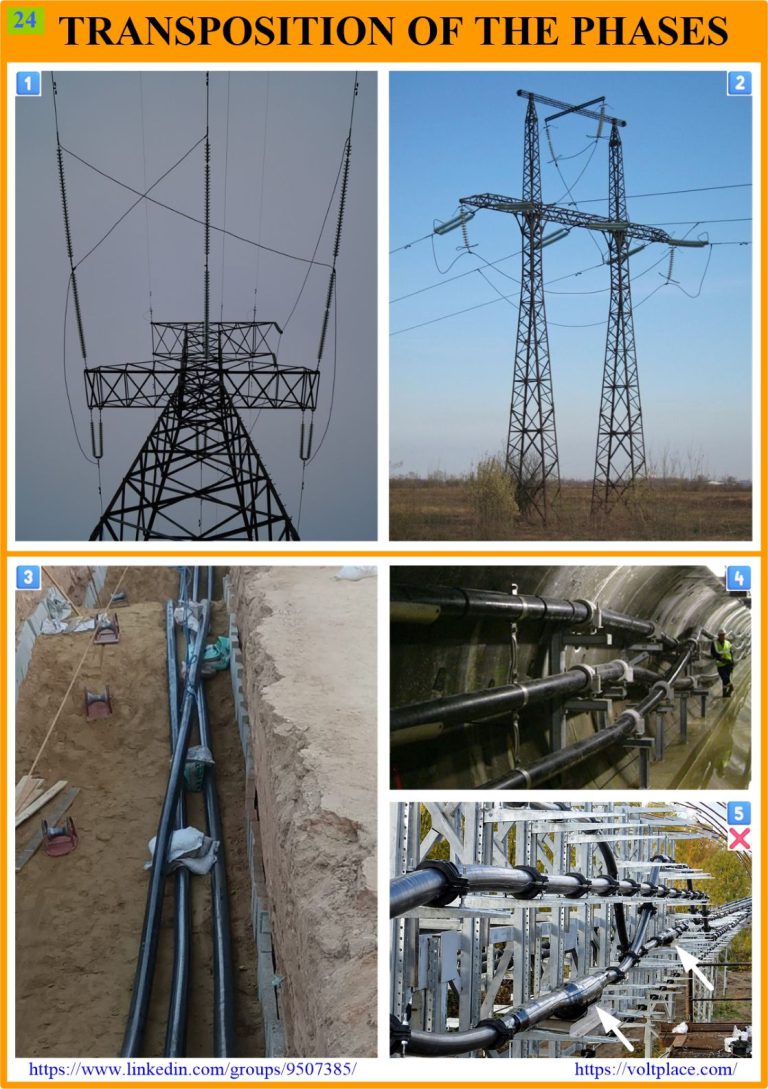
Transposition of the phases

In practice, “transposition of the phases” has to be found for both overhead lines (OHL) and cable lines. Here we note that for cable lines there is also another type of transposition – “transposition of phase screens”, called “screen cross-bonding – it is well-known, and calculation methods have been developed for it, allowing us to

Read More
2026 - Cable lines / 09.06.2026

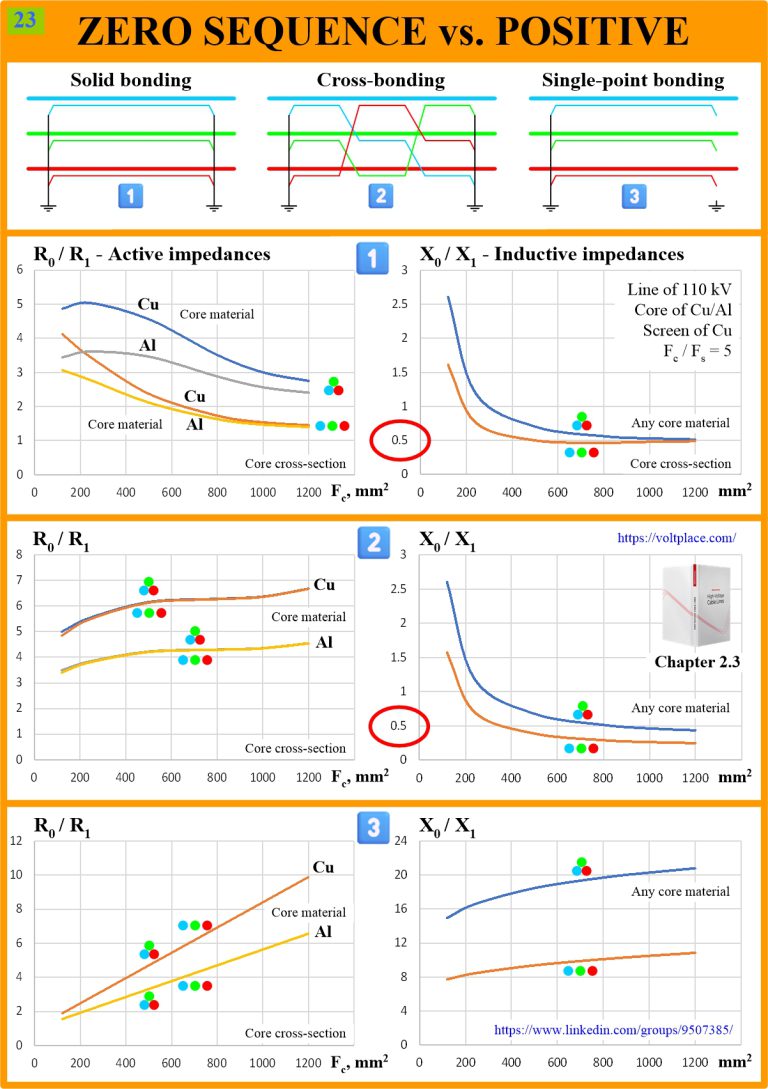
Zero-sequence impedance of the cable line

The longitudinal impedances of the cable line are necessary for calculating the normal mode, as well as various emergency modes (for example, for calculating network short-circuit currents required for the selection of the equipment). It is believed that the parameters of three-phase cable lines depend on the following key data:✅ cross section of the cable

Read More
2026 - Cable lines / 02.06.2026

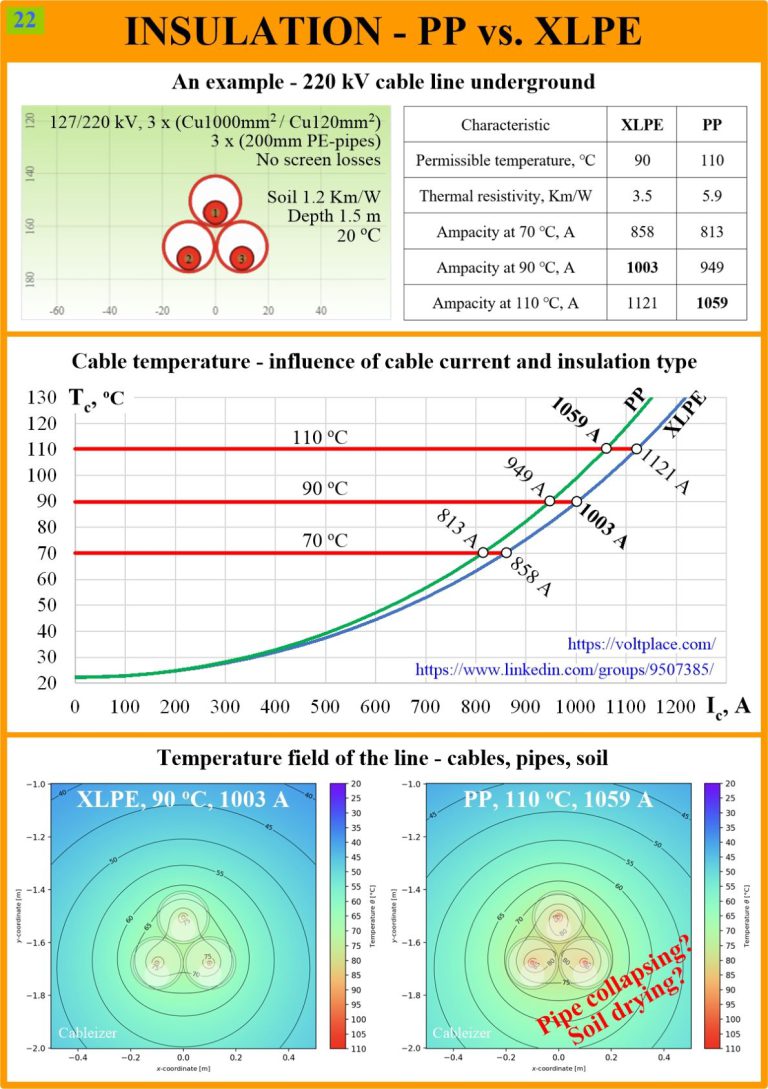
Polypropylene cable insulation

Currently, the following types of MV/HV cable insulation are widely known:1️⃣ XLPE, crosslinked polyethylene (typical for 1-500 kV).2️⃣ ERP, ethylene propylene rubber (typical for 1-35 kV).3️⃣ PVC, polyvinyl chloride (in some cases of 1-3 kV).4️⃣ PP, polypropylene (looking for its place). Let us talk about the first and last options. Usually, the main advantages of

Read More
2026 - Cable lines / 20.05.2026

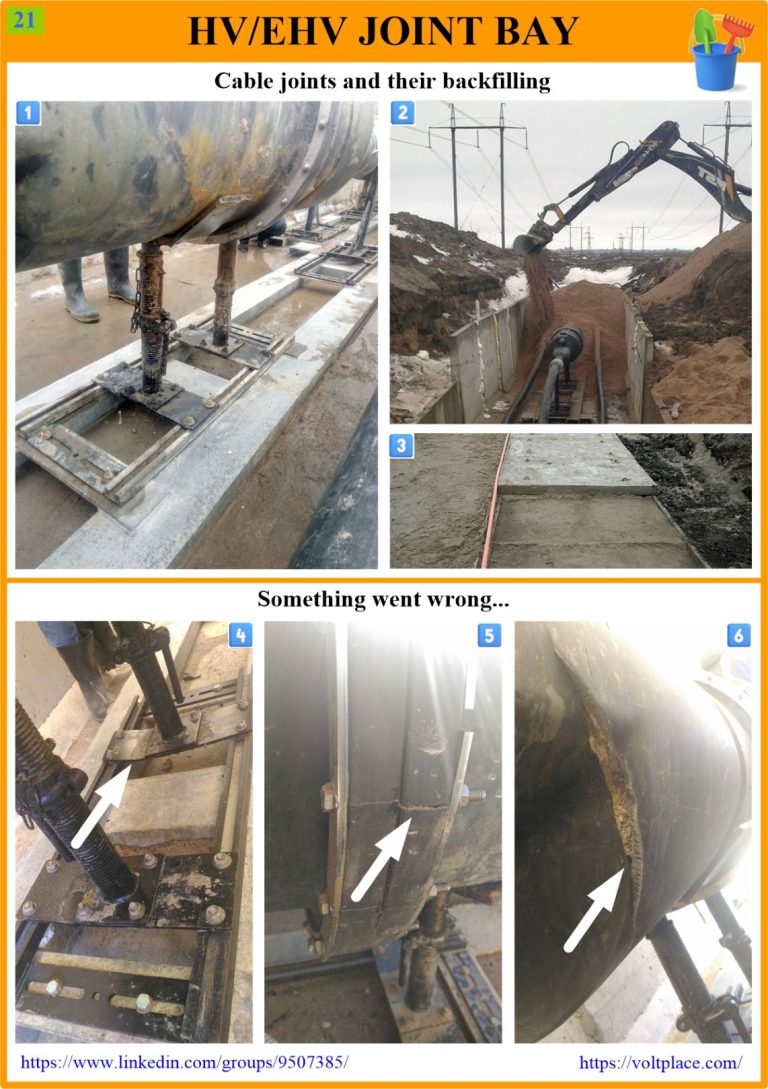
Backfilling of cable joints

Let us talk about high-voltage (HV) and extra-high voltage (EHV) cables lines. Joints of these lines are usually placed not in the open ground, but in reinforced concrete structures (troughs, chambers). There are two main options for action after installing the 220-550 kV cable joints:➡️ leave structures unfilled, with air inside;➡️ backfill structures, for example,

Read More
2026 - Cable lines / 12.05.2026

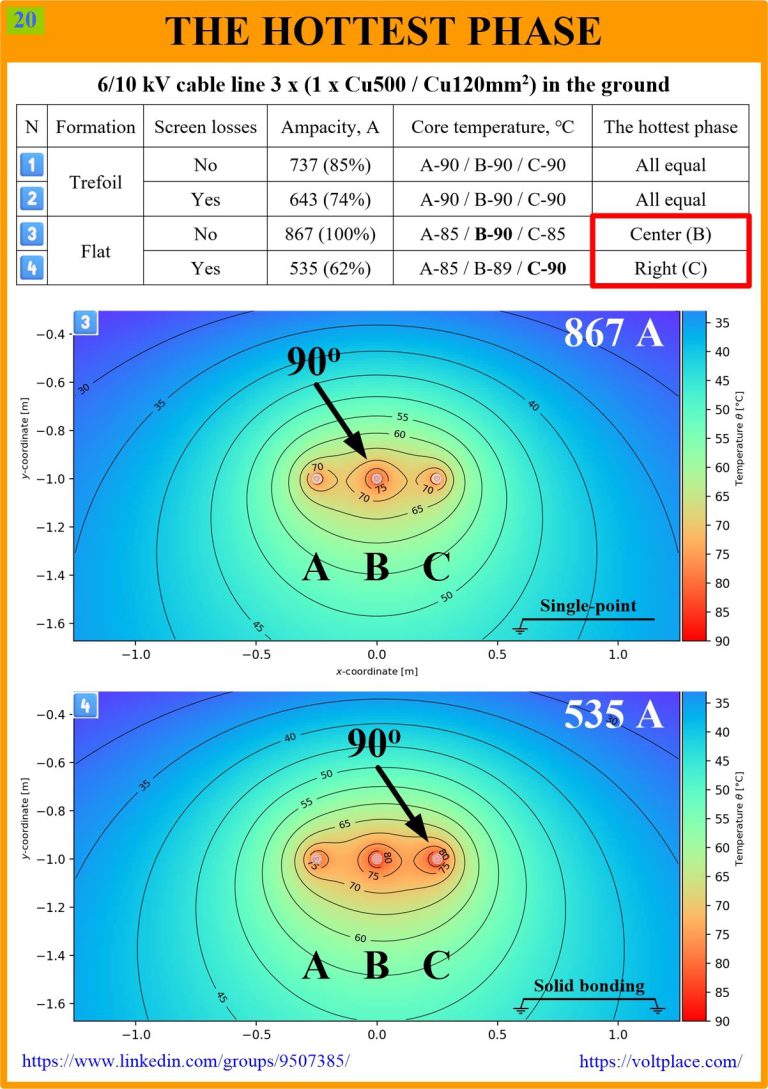
Cable temperature calculations

The thermal calculation of the line is an important section of the project. When performing calculations, it is necessary to carefully consider the laying conditions, soil and air parameters, the presence of pipes, parallel circuits, and third-party heat sources. If the line is consists of single-core cables, then additionally it is necessary to take into

Read More
2026 - Cable lines / 06.05.2026

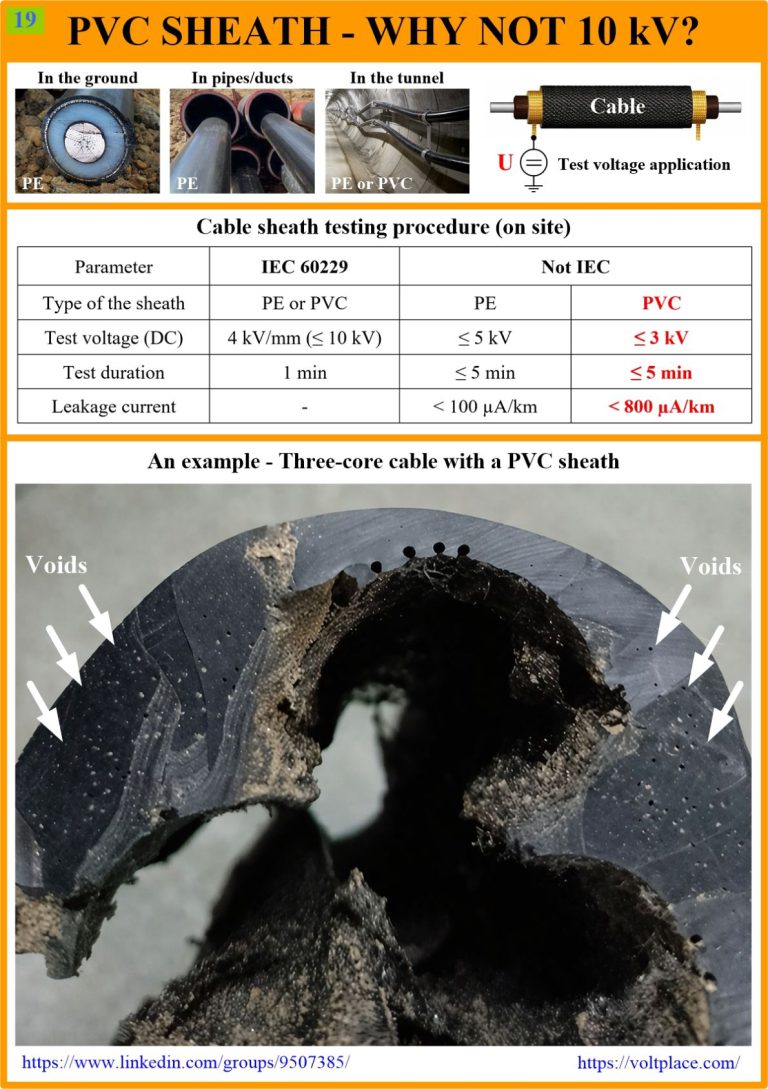
Cable with PVC sheath

Both polyethylene (PE) and polyvinyl chloride (PVC) are widely used in the production of the outer sheath of cables. The cost of PVC sheaths is usually less than that of PE, but a direct price comparison hardly makes sense, because sheaths made of these materials have different applications:✅ PE is quite resistant to moisture, but

Read More